
What I Wish I'd Known When My Father Died
What I Wish I'd Known When My Father Died
A funeral photographer's personal story about loss, memory, and why I do what I do.
It's been more than 20 years since my father passed away, and I still can't tell you what his funeral looked like.
I know it happened. I know there was a chapel, flowers, eulogies. I know people traveled from across the country to be there. I know my father, a former pastor who touched hundreds of lives, was honored by a room full of people who loved him.
But I can't picture it. Not clearly.
The details have faded. The faces blur together. The moments that everyone said were "beautiful" or "moving" exist now only as vague impressions, not memories I can hold onto.
And that loss, the loss of losing the loss, if that makes sense, is something I think about every single time I photograph a funeral.
The Funeral I Don't Remember
My father's death was sudden and tragic. One day he was here, and then he wasn't. The funeral happened in a fog of grief and shock, a blur of receiving lines, embraces from strangers, and well-meaning words I couldn't process.
I was present, but I wasn't there. Not really.
That's what grief does. It pulls you inward at the exact moment when you need to be paying attention outward.
Looking back now, I wish I could remember:
What the chapel looked like that day
Who spoke during the service
Which family members came to be there
The flowers my mother chose
The faces of the people whose lives my father had changed
The moments of connection between people who hadn't seen each other in years
I don't remember any of it. And worse, I have nothing to help me remember.
No photos. No video. No visual record that this profound, important day ever happened.
The Secondary Loss
Here's what I didn't understand then, but understand now: when someone dies, you don't just lose them once.
You lose them again and again as the memories fade.
You lose them when you can't quite remember the sound of their voice anymore.
You lose them when you can no longer picture their face clearly, when the details become fuzzy and you wish you had more to hold onto.
You lose them when you want to tell your children about their grandfather's funeral, about how many people came, about the faces in the room, about how much their grandfather meant to people, and you realize you can't paint that picture because you don't remember the details yourself.
That's the loss nobody warns you about.
My father died over two decades ago. My children never met him. And when they ask me about him, about his funeral, about who came, about how he was honored, I have to say, "I don't remember much. I wish I did."
That breaks my heart.
What I Didn't Know Then (And You Might Not Either)
If I could go back and tell myself one thing before my father's funeral, it would be this:
You will not remember this day the way you think you will.
You'll remember feelings. You'll remember the weight of grief. But the details? The people, the moments, the visual story of how your community came together to honor someone you loved?
Those will slip away faster than you think.
I didn't know that:
Grief makes terrible memories. Your brain is in survival mode. It's not encoding details. It's just trying to get you through.
You can't be everywhere at once. While you're greeting guests at the entrance, meaningful moments are happening at the casket. While you're with immediate family, extended relatives are sharing stories across the room. You'll miss most of it.
Other people won't remember either. I thought I could rely on my family's memories to fill in the gaps. But everyone else was grieving too. Their memories are just as fragmented as mine.
This moment matters more than you realize. At the time, I just wanted to get through it. I didn't understand that decades later, I would desperately want to remember. I didn't know I'd wish I could show my children photos of that day, who came, what it looked like, how much their grandfather meant to people.
Why I Became a Funeral Photographer
I didn't set out to be a funeral photographer. I was a photographer who took all kinds of work. Events, portraits, weddings.
But a few years ago, I had a conversation with a friend about funerals, loss, and memory. We talked about how photographs preserve moments we'd otherwise forget. About how grief makes it impossible to be fully present. About what gets lost when funerals aren't documented.
That conversation changed everything.
I started thinking about the families I'd met at funerals over the years. I could see them trying to greet everyone, trying to hold it together, trying to be present for every moment. And I wondered how much they'd actually remember later, because I knew from my own experience how quickly those details fade.
I realized there was a need here that nobody was filling. Families needed someone who understood the weight of these moments. Someone who knew how to be present without being intrusive. Someone who could capture what they couldn't see because they were too overwhelmed to notice.
And I understood, in a deeply personal way, what it meant to lose the memories of losing someone you love.
That's when I knew: This is what I was supposed to do.
So I decided to focus exclusively on funeral photography. Not because I love funerals (I don't). But because I know what it's like to desperately wish I could remember, and I don't want other families to experience that same regret.
Since 2019, I've documented dozens of services for families across Southern California. And when they see their photos for the first time, the response is always the same:
"We didn't even know that happened."
"I completely forgot my cousin Sarah was there."
"We'll probably never all be together like this again. I'm so glad we have these."
"I'm so grateful you were there. These photos are now all we have from that day."
Every time I hear those words, I'm reminded why this work matters.
Over the years, I've photographed services at Forest Lawn, Rose Hills, Pacific View Memorial Park, and many other venues across Southern California. Each family's story is different. Catholic masses, Protestant services, military honors, and celebration of life ceremonies. But the common thread is always the same: families are grateful someone was there to capture what they couldn't take in and what they'd eventually forget.
What You Can Do (That I Didn't)
If you're reading this because you recently lost someone, or anticipating a loss, here's what I wish someone had told me:
1. You will not remember this day clearly.
Accept that now. Your brain is protecting you. It's normal. But it also means you need help documenting what happens.
2. Don't rely on your phone or a friend's phone.
Phone photos are better than nothing, but whoever's taking them is also trying to grieve, support family, and stay present. What you usually end up with is a handful of random shots that don't tell the full story.
3. Don't ask a grieving friend or family member to photograph.
They need the space to grieve, too. When you ask someone to document the funeral, you're asking them to step out of experiencing it. They'll most likely resent it (even if they don't say so).
4. Consider hiring a professional.
I know it may feel uncomfortable. I know it might seem unnecessary or even inappropriate. But twenty years from now, you'll wish you had that visual record. Trust me.
5. If you don't hire a professional, at least do this:
Ask someone who isn't grieving (the funeral director, a family friend, someone from the church) to take photos of:
The full room during the service
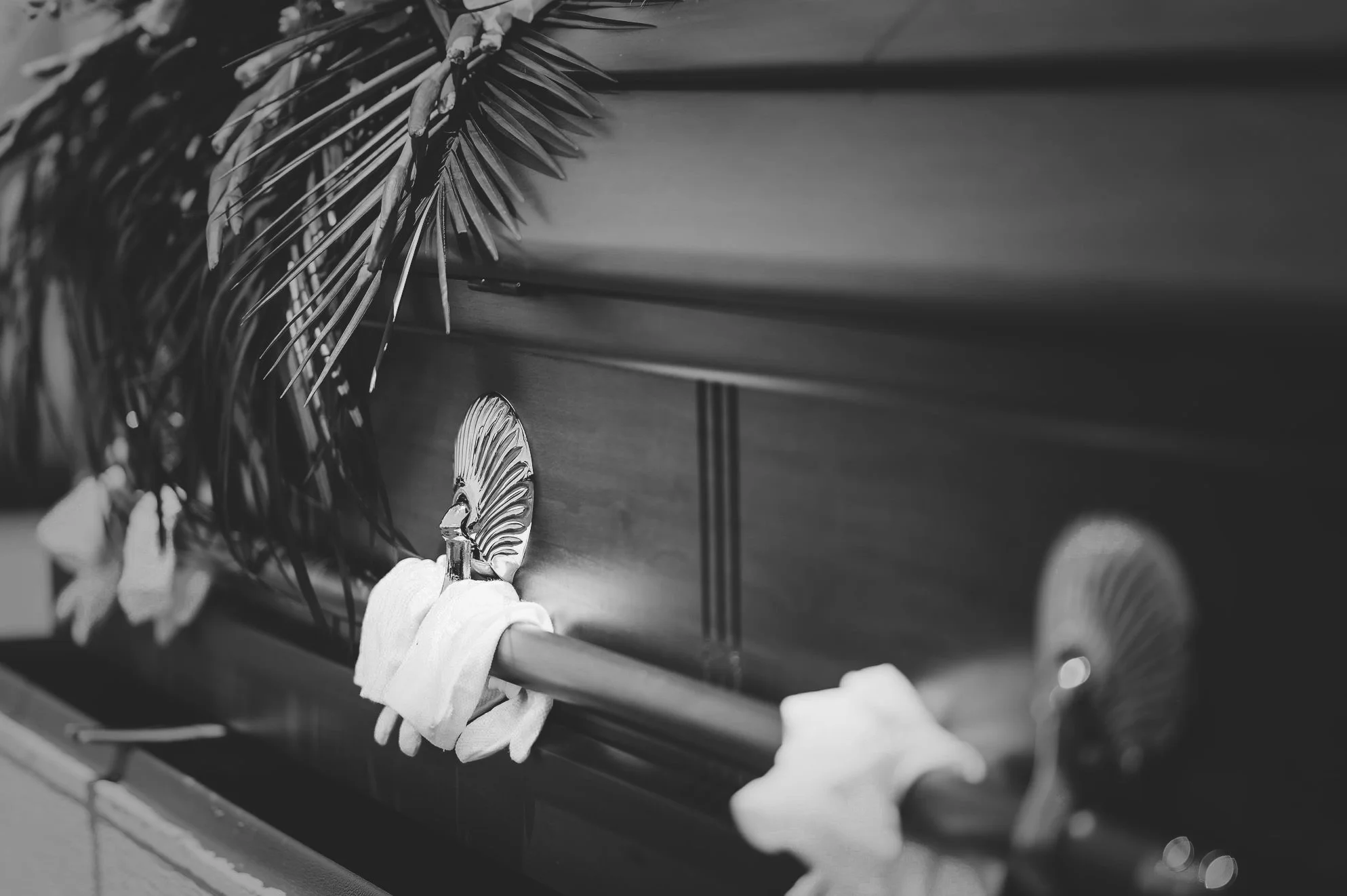
The casket and flowers
All the family members and friends who came
The program or other memorabilia
Any special moments (military honors, religious rituals, etc.)
Something is better than nothing.
6. This isn't selfish or disrespectful.
You might feel guilty even thinking about photography during a funeral. Let that go. In many cultures, photography at funerals is completely normal and even expected. This isn't about being morbid or disrespectful. It's about honoring the person you lost by documenting how they were remembered.
Twenty Years Later
I still miss my father. I always will.
But what I've learned, through my own loss and through photographing funeral services for families, is that grief doesn't diminish with time. It just changes shape.
What does diminish is memory.
The details fade. The faces blur. The moments slip away.
And that's why I do what I do.
I photograph funerals because I know what it's like to desperately wish I could remember. I know what it's like to want to tell your children about a day that changed your life, and realize you can't because the memories are gone.
I can't get my father's funeral back. I can't recover those lost memories.
But I can make sure other families don't experience that same regret.
If you're planning a funeral right now, or anticipating one, I want you to know:
It's okay to think about photography. It's okay to want to remember.
You're not being morbid. You're being human.
And twenty years from now, you'll be grateful you thought ahead.
Christoph Herrmann is a funeral photographer based in Southern California. Since 2019, he has specialized exclusively in funeral photography for families of all faiths and traditions throughout Los Angeles and Orange County. If you'd like to discuss photography for an upcoming service, you can learn more about his work here.